St. Augustine guide · Katy, Texas

St. Augustine in Katy, and what we do about its problems.

St. Augustine is the usual lawn grass in Katy. It likes the heat and handles some shade, but it has a short list of problems that come back every year. Here they are, with what we do about each.

Opening Feb 1, 2027 · see your price now, nothing charged at sign-up
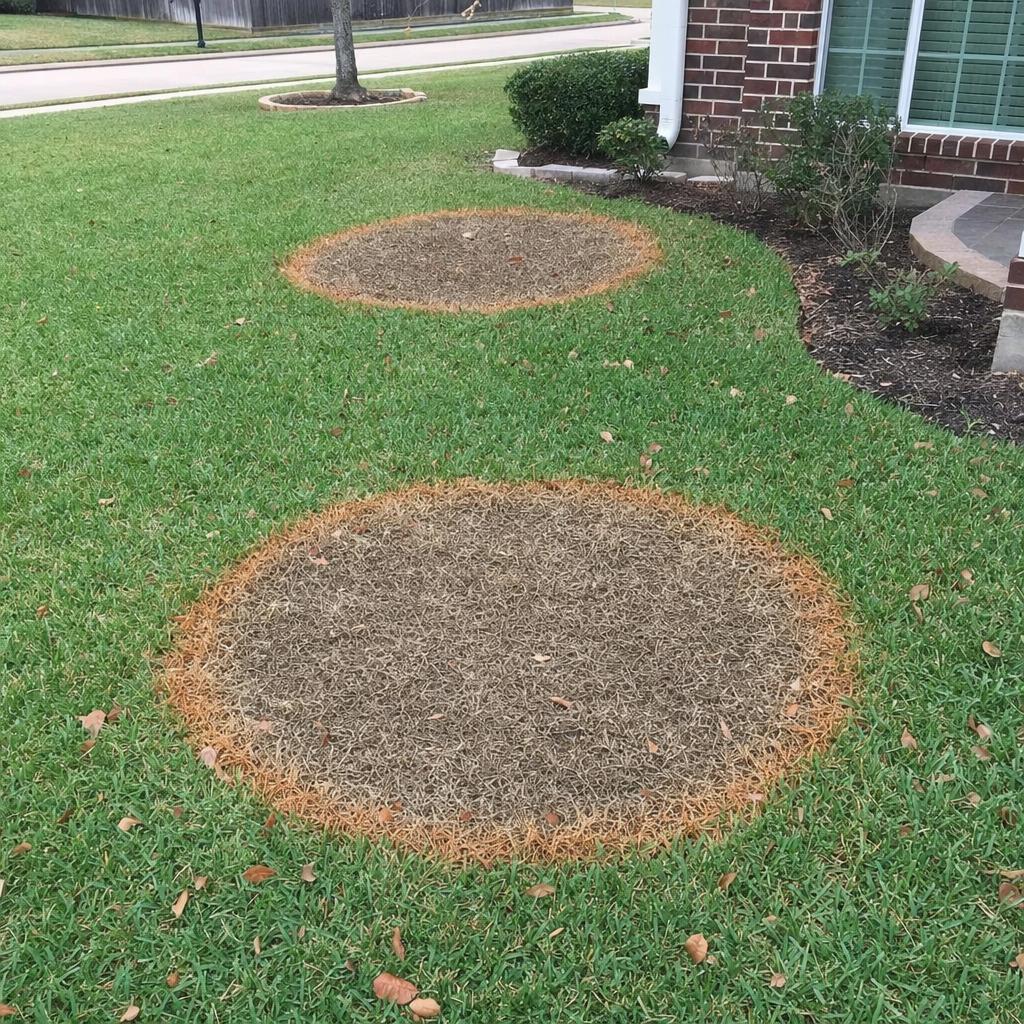
A St. Augustine lawn with two brown circles ringed in orange

Example photos, not customers' homes.
Problems

Five problems that come back every year.

Each one has a season. That's why our seven visits are timed to the Texas A&M calendar instead of every few weeks.

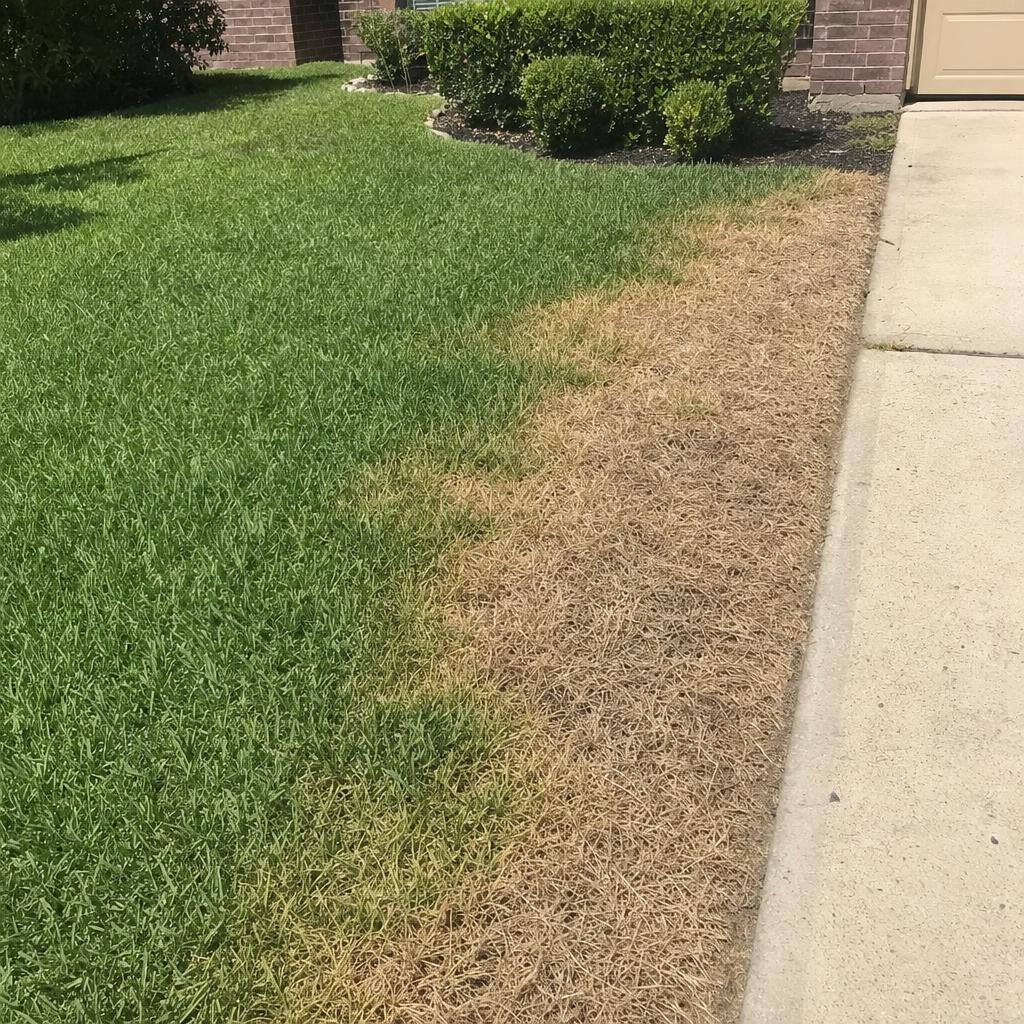
A St. Augustine lawn beside a driveway, with a dead strip along the concrete
June to October

Chinch bugs

What it looks like
Yellow, then straw-brown patches that spread, starting in the hottest, sunniest spots, often along a driveway or sidewalk.
Why it happens
Tiny sap-feeding insects that thrive in heat and drought stress. Watering won't bring the dead grass back.
What we do
On the plan, the June and August visits check for them with a water test at the edge of the damage, and treat the area and a margin around it if we find them. We check again over the next two weeks.
A St. Augustine lawn with two brown circles ringed in orange
Fall and spring

Large patch (brown patch)

What it looks like
Brown circles, sometimes several feet across, often with an orange or yellow edge. Leaves pull loose from the runner at the base.
Why it happens
A fungus that grows when it's cool and wet, and returns to the same spots. Too much fall water and watering at night make it worse.
What we do
We turn sprinkler run times down for fall. On the plan, the October visit puts down prevention where large patch showed up before.
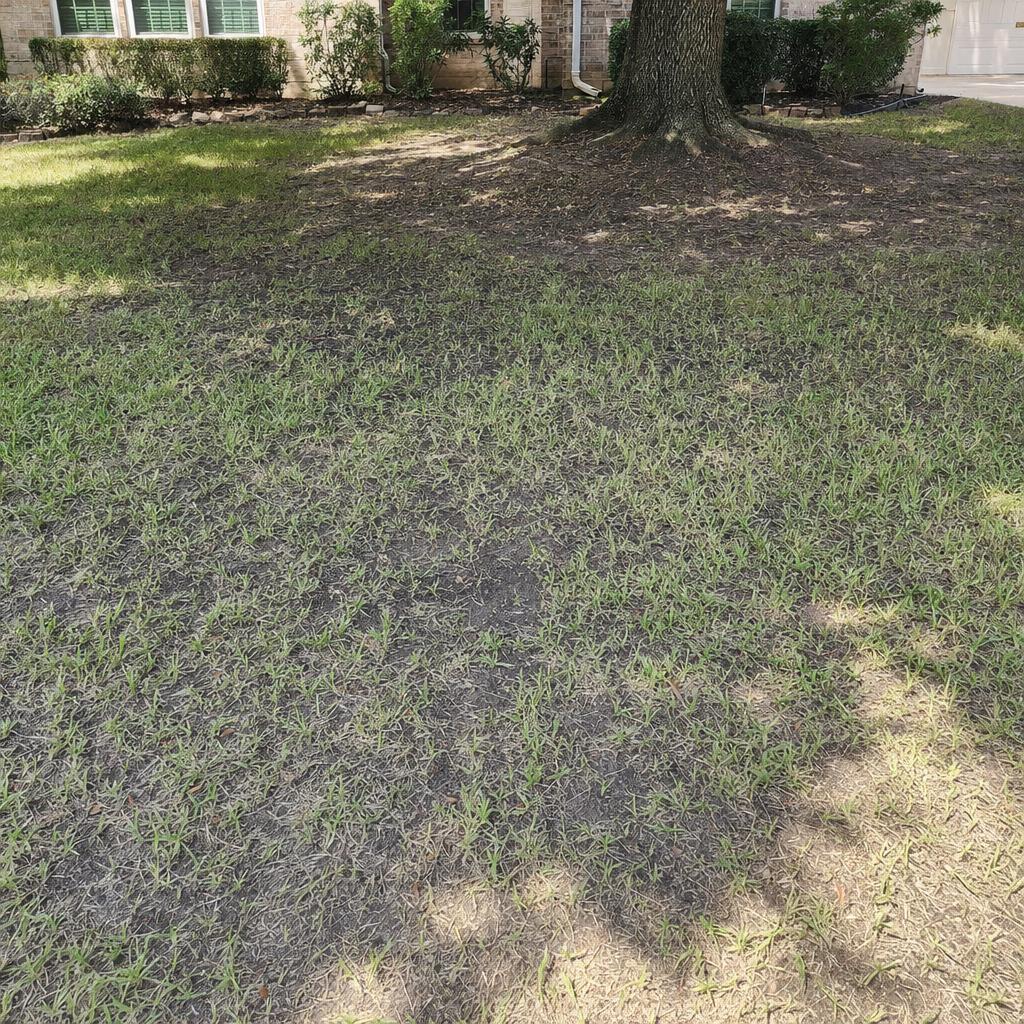
A thin, yellowing St. Augustine lawn under a shade tree
Spring and early summer

Take-all root rot

What it looks like
Irregular yellow, thinning areas. Runners pull up easily, and the roots are short and dark.
Why it happens
A root fungus that hits stressed lawns, often after wet spells, in shade, or where water sits.
What we do
We pull up a runner and check the roots before blaming feeding or water. Peat moss topdressing is the usual fix, $199 as a one-time add-on. We also look at shade and drainage.
July to September

Gray leaf spot

What it looks like
Small oval spots on the blades, gray in the middle with a brown edge. From a distance the lawn looks scorched or uneven.
Why it happens
A leaf fungus of hot, humid weather. It's worse on new sod, in shade, after heavy summer nitrogen, and when the lawn stays wet overnight.
What we do
We look for it on the summer visits, and if we find it we tell you in the photo report how to move watering to early morning. Most lawns grow out of it as weather cools.
Any time, most in spring

Iron chlorosis

What it looks like
New blades turn yellow between green veins. The lawn looks pale even after feeding.
Why it happens
Iron is in the soil but the grass can't take it up, usually because the soil is alkaline. Some Katy yards test alkaline, especially near concrete and on fill dirt.
What we do
An optional soil test, $49, run by the Texas A&M soil lab on the first visit, tells us the pH and iron. Then your feedings are matched to your soil.
Watering and mowing

The two things you control.

Watering

  • Water when the lawn shows it needs it. Blades fold, turn a dull blue-gray, or footprints stay.
  • Then water deeply, about an inch a week in summer heat, counting rain.
  • Water early in the morning, so the grass dries during the day.
  • Cut back in fall and winter. Too much fall water feeds large patch.
  • Follow your city or utility district's watering schedule.

Mowing

  • Keep St. Augustine about 2.5 to 4 inches tall, at the high end in shade.
  • Never cut more than a third of the blade at once.
  • Use a sharp blade. A dull one tears the leaf and browns the tips.
  • Leave the clippings on the lawn unless they clump.

Our weekly mowing add-on, March to October, cuts at the right height for St. Augustine.

The plan

Seven visits, timed to these problems.

FebruaryStop summer weedsPre-emergent before crabgrass sprouts.
AprilWake it upFirst feeding once it's growing. Sprinklers checked.
JuneFeed and watchSummer feeding. Chinch bug and grub checks begin.
AugustBug patrolChinch bugs and grubs treated if we find them.
SeptemberStop winter weedsPre-emergent for winter weeds, and a fall feeding.
OctoberHead off brown patchPrevention where large patch showed up before.
Nov or DecPut it to bedWinter weeds treated. Sprinklers set for winter.
Every visitA photo reportWhat we saw, what we did, what comes next.

From $59 a month by the measured size of your grass, plus tax, with a $29 first visit. See plans and prices.

Questions

Short answers.

How high should I mow St. Augustine in Katy?

Keep it about 2.5 to 4 inches tall, toward the high end in shade, and never cut more than a third of the blade at once.

How often should I water St. Augustine in summer?

Water when the lawn shows it needs it, when blades fold, turn dull blue-gray, or footprints stay. Then water deeply, about an inch a week in summer heat counting rain, early in the morning.

Why is my St. Augustine dying along the driveway?

In hot, sunny spots next to concrete it's often chinch bugs. A water test at the edge of the damage confirms it. Watering won't bring the dead grass back.

What are the brown circles in my lawn in fall?

Usually large patch, a fungus that grows in cool, wet weather and returns to the same spots. Less fall water helps, and on our plan prevention goes down in October where it showed up before.

Why is my St. Augustine yellow with green veins?

That's usually iron chlorosis. The grass can't take up iron, often because the soil is alkaline. A soil test shows the pH so feedings can be matched to your soil.

See your price for a timed plan.

Enter your address. We measure your lawn from county records and show the monthly price.

See your price
More from Tended

Katy service areas and guides